

Places To See – Famagusta
View some of the articles about Northern Cyprus below, or choose from one of the categories on the right. You can also perform a search about North Cyprus on the right hand side.
31 March, 2010

Of the two main holiday destinations in North Cyprus, Famagusta and the surrounding area come second in popularity to Kyrenia. But it was not always so. Prior to the partition of the island in 1974, Famagusta was one of the […]
25 October, 2009
The Venetians, wishing to make their own mark on the palace changed the façade of the entrance, extending it outwards, building basket arches and incorporating massive granite pillars imported from the ruined city of Salamis. Over the central arch are […]
26 October, 2009
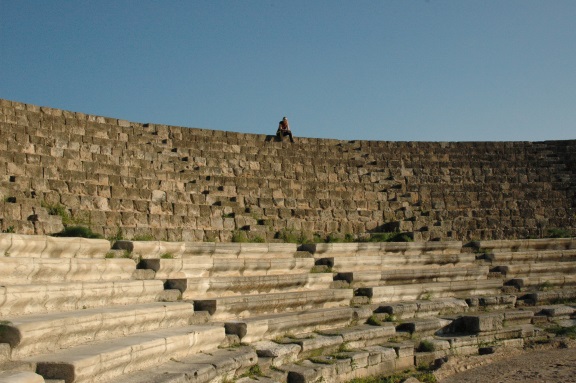
Walking from the bath house complex down a paved columned street, there is a partially excavated area on the right. This is the site of the amphitheatre where excavations where abandoned in 1974. The outer walls of the theatre are […]
26 October, 2009

Adjacent to the ticket office, the bath houses are the most visited part of the site. There is the central gymnasium or exercise ground that is surrounded by marble columns. These columns were not originally part of the gymnasium and […]
3 December, 2009
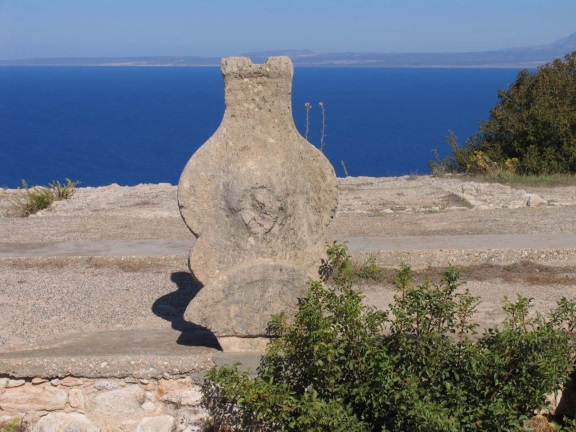
The oriental style cliff-top palace of Vouni was built during Persian dominance by a pro-Persian king of Marion. The strategic position enabled the inhabitants to look down on the city of Soli and had advance warning if the Greek warriors […]
26 October, 2009

From the Dervish Pasha Konak, turn right from the front door and you will be in the thoroughfare that was once called Victoria Street (Salahi Sevket Sokak). This was the main road through the predominantly Armenian quarter until 1964, when […]
22 November, 2009
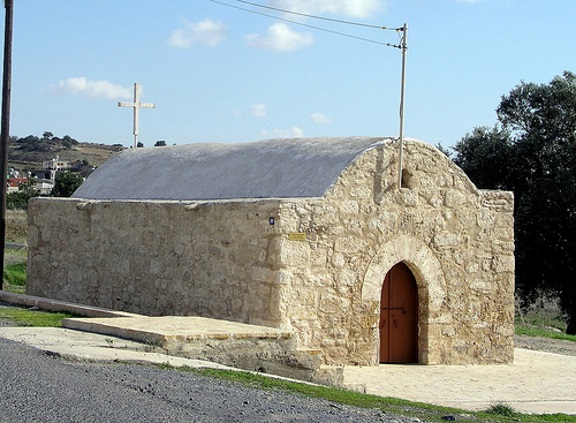
The village of Korucam can to be found nestling in a valley towards the north of Guzelyurt Bay between the villages of Camlibel and Sadrazamkoy. It was called Kormakiti before partition and many people still refer to it by that […]
25 October, 2009
The Martinengo Bastion | Famagusta Situated on the north west corner of the city this bastion is diamond shaped and was considered by the Ottoman forces to be impregnable. It is constructed on top of solid rock and maybe for […]
25 October, 2009
The Land Gate and Ravelin | Famagusta The land gate is probably as old a building within the city as the citadel, though the current bridge and gateway entrance are relatively modern. The road now passes through one of the […]
3 December, 2009
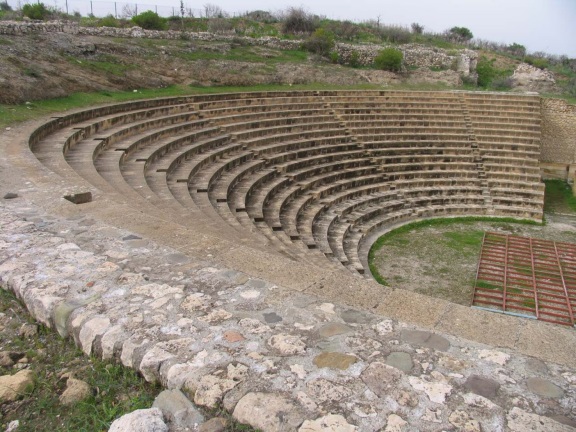
About 2 kilometres west of Lefke is the ancient city of Soli. It is not difficult to find as the white roof that covers the basilica floor can be seen from the road, but the turning is well hidden and […]