

History
North Cyprus History
25 October, 2009
Church of SS Peter and Paul | Famagusta This church, lies to the south of the palace and though closed to the public is in good repair. It was used at one time as a mosque, the remains of the […]
6 January, 2010

Lefkara Lace Although I have headed this article Lefkara Lace, there is a lot more to the lace industry than that made on the island of Cyprus. Just the mention of the word lace will probably conjure up a vision […]
26 October, 2009
Ayios Epiphanios Basilica There is tarmac road leading from the rear of the theatre that forks left and right. Take the left fork and follow the road passing a villa with visible bath and furnace area on the left, until […]
25 October, 2009
A small fishing village that stands at the gateway to the Karpaz peninsula, with a picturesque tiny harbour from which the fishermen take their boats every morning and return to sell their catch later in the day. It is a […]
26 October, 2009
Cyprus is an island that has been inhabited for over 9,000 years, from the Neolithic Stone Age to the civilised 21st century, mankind has walked this fertile land. Early settlers most probably came from nearby countries, with Turkey only 40 […]
25 October, 2009
On the north side of the palace lie the remains of the Franciscan church dating from early to mid 13th Century. There is little left intact, but it is an interesting example of ecclesiastical architecture. There is a very old, […]
25 October, 2009
Ayia Trias Basilica Mosaics Look for the signs in the village that are directions for Sipahi and follow the road to the site of Ayias Trias. It is encircled by a wire fence and there should be a custodian to […]
25 October, 2009
Bellapais Abbey | Kyrenia The Abbey of Bellapais has drawn visitors to the island of Cyprus since medieval times when the abbey was built. From the pilgrims who trod the ancient paths in search of a miracle through to the […]
3 December, 2009

The Guzelyurt museum is situated in the former ecclesiastical residence adjacent to the Church of St. Mamas. There is a small car park and it is within walking distance of the town centre. The Natural History section is on the […]
30 November, 2009
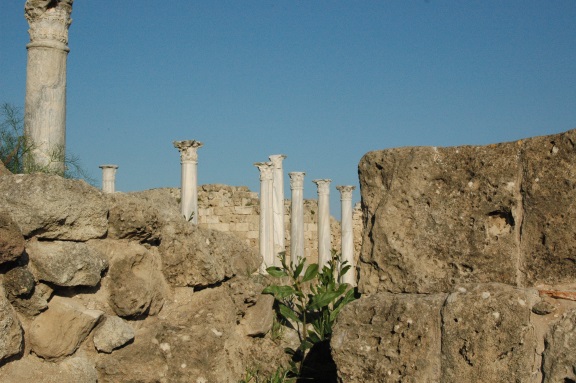
The partially excavated site of the ancient city of Salamis, has fascinated archaeologists for hundreds of years and it is the most important archaeological site on the whole of Cyprus. Nestling on the shoreline of Famagusta Bay, the remains of […]